Uncategorized
A fresh scratch can make an otherwise well-kept vehicle look neglected in seconds. But the right car scratch removal process is not simply about rubbing on a product until the mark fades. Professional correction starts by identifying exactly what has been damaged, then using the least aggressive method that delivers a clean, even result.
That distinction matters in Florida, where strong sun, salt air, road grime, and frequent washing can make thin or compromised paint more vulnerable over time. Some marks can be safely polished away. Others need touch-up work, localized refinishing, or protection to prevent the damage from spreading. Knowing the difference helps preserve both appearance and paint thickness.
Start With an Accurate Scratch Assessment
Modern automotive paint is built in layers: the metal or plastic panel, primer, color coat, and clear coat. Most light surface marks affect only the clear coat, which is the glossy protective layer on top. Those are the scratches that often respond well to professional polishing.
A proper assessment begins with a thorough wash and decontamination. Dirt, mineral deposits, road film, and embedded debris can look like paint damage, while debris caught in a scratch can make it appear deeper than it is. Correcting paint without first cleaning the surface risks adding more marring during the process.
Once the panel is clean and dry, the scratch should be inspected in direct and angled lighting. This reveals whether the defect is a light scuff, a clear-coat scratch, a deeper color-coat break, or a gouge that reaches primer or bare material.
A common at-home check is the fingernail test. If a fingernail glides across the mark without catching, the scratch may be shallow enough for paint correction. If it catches noticeably, the scratch may extend beyond the clear coat. This test is useful, but it is not a final diagnosis. Paint thickness, panel material, previous bodywork, and the location of the damage all affect the safest repair approach.
What Can Usually Be Polished Away
Light swirls from improper washing, faint brush marks, paint transfer from another object, and very shallow clear-coat scratches can often be significantly reduced or fully removed through machine polishing. Paint transfer is especially deceptive. What looks like a severe scratch may be another material sitting on top of the clear coat, not missing paint.
The goal is to level the surrounding clear coat carefully until the defect is no longer visible, then refine the finish to restore clarity and gloss. The key word is carefully. Every polishing step removes a small amount of material, so correction should always be measured rather than aggressive.
When Polishing Is Not Enough
If the scratch exposes a different color beneath the paint, gray primer, metal, or plastic, polishing alone will not make it disappear. In fact, continued polishing can worsen the situation by thinning the surrounding clear coat while leaving the underlying damage exposed.
Deeper scratches may benefit from color-matched touch-up paint, clear coat touch-up, wet sanding, and precision leveling. Even then, results vary. A small rock chip on a hood can often be made far less noticeable, while a deep scrape across a body line may require body shop refinishing for a near-invisible repair.
Bare metal deserves prompt attention because moisture can lead to corrosion. On plastic bumpers, there is no rust concern, but exposed paint can still collect dirt and degrade the appearance of the panel.
The Professional Car Scratch Removal Process
A premium correction service is built around control, not shortcuts. The process should protect the vehicle’s finish at every stage while matching the level of repair to the actual condition of the paint.
Clean, Decontaminate, and Inspect
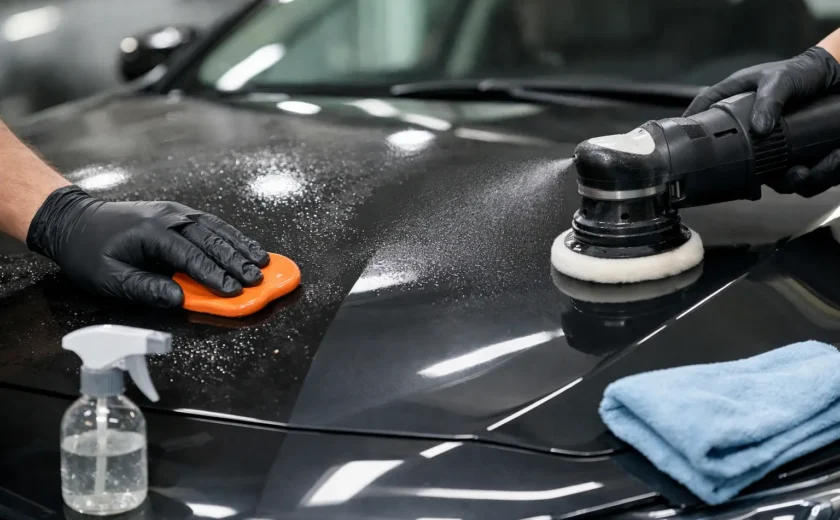
The vehicle is first washed using methods designed to minimize additional scratching. Chemical decontamination removes iron particles and other bonded contamination, while a clay treatment or synthetic clay media may be used where necessary to create a smooth surface.
After drying, trim, edges, badges, sensitive surfaces, and nearby panels are protected as needed. A paint depth gauge may be used on painted metal panels, particularly when a vehicle has visible prior repair work or is being considered for more intensive correction. This information helps determine how much correction can be performed responsibly.
Test the Least Aggressive Correction Method
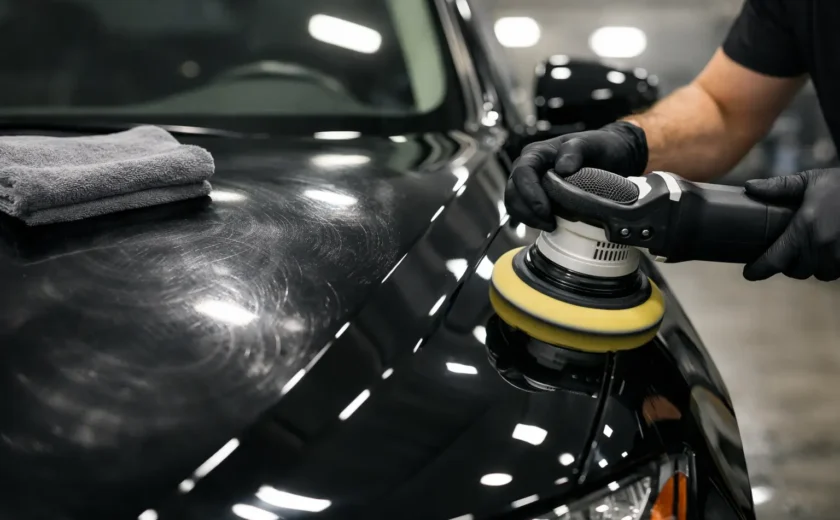
Rather than applying the same compound to every vehicle, an experienced detailer performs a test spot. This means trying a selected pad, machine, polish, and technique on a small area before correcting the entire panel.
The test spot answers practical questions: Will a finishing polish remove the defect? Does the paint need a moderate compound first? Is the clear coat soft and easily corrected, or hard and more resistant? It also shows whether the selected approach finishes cleanly without haze, micro-marring, or unnecessary material removal.
This is where skill makes a visible difference. A heavy compound can remove defects quickly, but it can also leave haze that requires further refinement. A milder polish may take longer, yet preserve more clear coat and produce a more refined finish. The right choice depends on the paint, the scratch depth, the vehicle’s history, and the owner’s expectations.
Correct and Refine the Paint
For light defects, a one-step enhancement polish may be enough to improve gloss and reduce visible scratches. More pronounced clear-coat damage may require a multi-step correction: a cutting stage to address the defect followed by a finishing stage to restore depth, sharp reflections, and clarity.
Panel edges, body lines, and previously repaired areas require extra caution because paint can be thinner there. The same is true for piano-black trim and dark paint, which reveal even small imperfections under sunlight. A quality result is not just the absence of the original scratch. It is a finish that looks even under real-world lighting.
Address Deeper Damage Honestly
When a scratch cannot be safely removed, a professional should explain the options clearly. That may mean improving the appearance through localized touch-up and leveling, stabilizing exposed areas, or recommending conventional refinishing when the damage warrants it.
Touch-up repair is often an excellent value for chips and narrow scratches, particularly on daily-driven vehicles. It can reduce contrast, protect the damaged area, and make the defect much less distracting. It is not always the same as a body shop paint repair, especially when viewed closely. Setting that expectation upfront is part of precision workmanship.
Protect the Corrected Finish
Corrected paint needs protection, especially after polishing has removed old waxes, sealants, and surface contamination. The best protection depends on how the vehicle is used, stored, and maintained.
A quality sealant can provide strong gloss and practical short-term protection. Ceramic coatings are a more durable option for owners who want easier washing, improved chemical resistance, and a high-gloss finish that holds up well through regular use. Coatings do not make paint scratch-proof, but they can reduce the chances of light wash marring when the vehicle is maintained properly.
For high-impact areas such as the front bumper, hood edge, mirrors, rocker panels, and door cups, paint protection film offers a different level of defense. It is designed to absorb the abuse that polishing and coatings cannot prevent, including many rock chips and road-wear marks. For a new vehicle or a freshly corrected front end, this can be a smart preservation investment.
Avoid the Shortcuts That Create More Damage
Many scratches become worse through well-intended DIY attempts. Dry wiping dust from paint, using an old towel, applying household abrasives, or aggressively rubbing a scratch with a generic compound can leave a larger dull spot around the original mark.
Avoid using a scratch remover before washing the area thoroughly. Do not use abrasive pads, harsh solvents, or magic-eraser-style products on painted panels. And be cautious with dealership or automatic car wash brushes, which can create the swirl marks that later require correction.
Between professional services, use clean microfiber towels, a pH-balanced vehicle shampoo, and lubricated wash techniques. Dry with a dedicated microfiber drying towel rather than rubbing the paint with whatever is available. Small habits have a direct effect on how long a polished finish stays sharp.
The best time to address a scratch is before it becomes part of the vehicle’s overall appearance. A careful inspection and the right level of correction can restore confidence every time you walk up to your vehicle, while preserving the paint you will need for years of driving ahead.