Uncategorized
A black vehicle can look freshly detailed from twenty feet away, then reveal a web of fine scratches the moment Florida sun hits the paint. Effective black car swirl removal is not about covering those marks with a glossy dressing. It is a controlled paint-correction process that levels the damaged clear coat enough to restore sharp reflections, deep color, and a finish that stays impressive after the next wash.
Black paint is rewarding when it is right and unforgiving when it is not. Every improper wash, dry towel, automatic wash brush, and dusty wipe-down leaves its evidence behind. The good news is that many swirls can be corrected. The important part is knowing what is truly removable, what requires a measured approach, and how to protect the finish once it has been restored.
Why Black Paint Shows Every Swirl
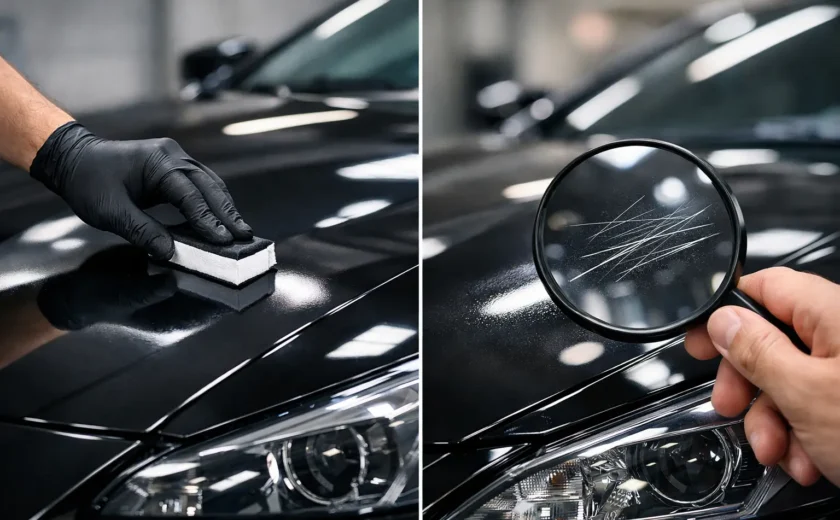
Swirls are fine scratches in the clear coat, not circular marks deliberately placed into the paint. They are usually caused by friction. A wash mitt that picks up grit, a towel used on a dry panel, or a quick trip through a brush-style wash can create thousands of tiny scratches that scatter light.
On lighter colors, that scattered light is often difficult to see. Black paint offers no place to hide it. Instead of reflecting a clean, dark surface, the panel appears hazy, gray, or covered in circular spiderweb patterns under direct sun and shop lighting.
Florida conditions make the issue more noticeable. Road film, airborne sand, pollen, salt near coastal areas, and intense UV exposure all create a harsher environment for paint. Heat can also make owners more likely to wipe dust or water spots off a panel between washes, which is often where additional marring begins.
What Professional Black Car Swirl Removal Involves
Paint correction is a process of refining the clear coat, not simply making the vehicle shiny. A professional detailer begins with a proper wash and chemical decontamination to remove bonded contaminants that could interfere with polishing. Depending on the paint condition, a clay treatment may also be used to create a smooth surface before correction begins.
The paint is then inspected under controlled lighting. This step matters because sunlight may show one type of defect while focused inspection lighting reveals another. Swirls, isolated deeper scratches, water-spot etching, oxidation, and sanding marks each respond differently to correction.
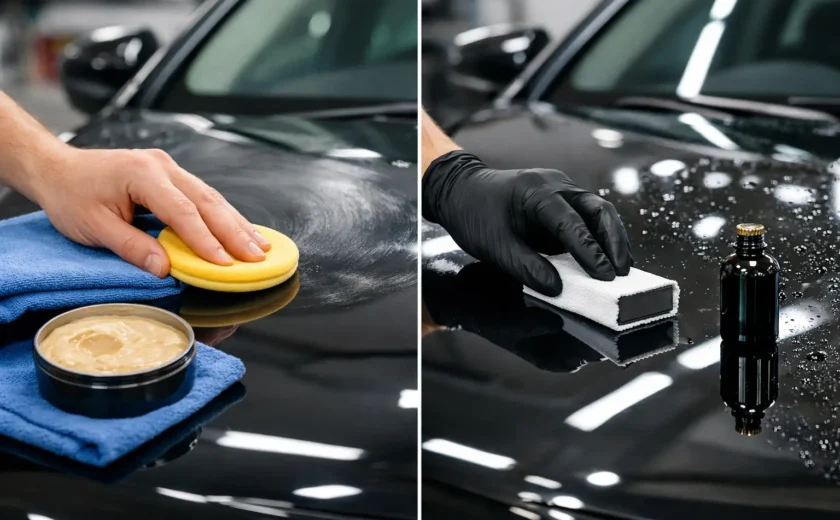
Next comes a test spot. Rather than choosing an aggressive polish and treating the entire vehicle the same way, an experienced technician tests a small area with an appropriate pad, machine, and polish combination. The goal is to find the least aggressive method that delivers a meaningful improvement.
That approach protects the clear coat. Every correction removes a microscopic amount of material, so aggressive work is not automatically better work. On a newer vehicle with light wash marring, a one-step enhancement may create an excellent visual improvement. A neglected vehicle with deeper swirls and dullness may need a multi-step correction to produce a more dramatic transformation.
After polishing, the surface is carefully wiped down and inspected again. This confirms the defects were actually corrected rather than temporarily concealed by polishing oils or fillers. Only then is the paint ready for protection.
Correction Is Not the Same as Filling
Some products can make swirls look less visible for a short period by filling them. That may be useful for a quick cosmetic refresh, but it is not true correction. Once the vehicle is washed or exposed to weather, the same marks can reappear.
True correction changes the surface so light reflects more evenly. The result is cleaner reflections, richer black paint, and the crisp, wet-looking gloss owners expect from a premium finish. The trade-off is time, skill, and a process tailored to the condition of the vehicle.
Can Every Scratch Be Removed?
No reputable detailer should promise that every defect will disappear. Fine swirls and light marring are commonly correctable. Deeper scratches may remain visible because removing them completely could require taking away too much clear coat.
A useful rule is to consider depth. If a scratch catches a fingernail, it may extend too far into the clear coat for safe full removal. It can often be softened significantly, making it far less noticeable from normal viewing distance, but chasing perfection is not always the right choice.
Paint thickness, vehicle age, previous bodywork, and the hardness of the clear coat all affect what can be safely achieved. A high-quality correction service balances appearance with preservation. The best result is not the most aggressive result. It is the finish that looks exceptional while maintaining a healthy margin of protection for the future.
Choosing the Right Level of Paint Correction
The proper service depends on what you see, how closely you inspect the vehicle, and how you plan to maintain it afterward. A daily-driven black SUV with light wash marks may benefit from an enhancement polish that improves gloss and clarity without the time investment of a full multi-stage correction.
For a luxury vehicle, enthusiast-owned car, or vehicle being prepared for ceramic coating, more extensive correction often makes sense. Ceramic coating preserves and enhances the condition of the paint beneath it. It does not remove swirls already present, so correcting the finish first produces a much stronger final result.
A vehicle with severe defects may need a heavier initial compound followed by a refining polish. This can bring back substantial clarity, but not every panel will need the same treatment. Repainted panels, thin paint, and edges require additional caution. Precision work means adjusting the process panel by panel rather than treating the vehicle like an assembly line.
Protection After Swirl Removal Matters
A freshly corrected black finish needs a protection plan. Without one, contaminants bond to the surface more easily and routine washing can quickly reintroduce marring.
A quality sealant or wax can provide a strong short-term gloss boost and a practical layer of protection. Ceramic coating is often the better choice for owners who want durable chemical resistance, improved water behavior, easier maintenance, and long-term preservation. Paint protection film can be especially valuable on high-impact areas such as the front bumper, hood, mirrors, and rocker panels, where physical road damage is a greater concern than wash-induced swirls.
Protection does not make paint scratch-proof. Ceramic coating is not armor, and paint protection film still needs proper care. What protection does provide is a more resilient, easier-to-maintain surface that helps preserve the time and craftsmanship invested in correction.
How to Keep Black Paint Looking Corrected
The maintenance routine is where black paint either stays sharp or gradually returns to a swirled appearance. Avoid brush washes and any wash method that uses dirty tools across the paint. A proper hand wash starts with rinsing away loose debris, using clean wash media, and drying with soft, high-quality microfiber towels.
Do not dry-wipe dust, pollen, or road film from the paint. Even a soft towel can drag abrasive particles across a black panel. If the vehicle needs attention between washes, use a suitable lubrication product and clean microfiber towels, or schedule a proper maintenance wash.
Keep towels separated by task. Wheels, lower panels, door jambs, paint, and interior surfaces should not share the same towels or wash tools. It is a simple operational detail, but it prevents the grit collected in one area from being transferred to the most visible part of the vehicle.
Parking habits help as well. Covered parking reduces UV exposure, water spotting, and contamination buildup. When covered parking is not possible, regular washing and protection become even more important in the Florida climate.
When Professional Correction Is Worth It
For many owners, black car swirl removal is most valuable before selling a vehicle, applying ceramic coating, attending a special event, or restoring pride in a vehicle that has slowly lost its gloss. It can also be a smart preservation decision for a newer purchase that has already been through dealership washes or automatic car washes.
Diamond Detailing approaches correction as restoration and protection, not a one-size-fits-all polish. The right service begins with inspecting the paint, setting realistic expectations, and matching the correction level to the vehicle’s condition and the owner’s goals.
A black vehicle does not need to be flawless under every inspection light to look extraordinary. It needs clear, refined paint, protection that fits how it is driven, and a maintenance routine that respects the finish every time it is washed.