Uncategorized
A black hood can look flawless after a fresh wash, then show water spots, pollen film, and dullness after a few weeks of Florida heat. That is the practical question behind ceramic sealant versus wax: which protection gives your vehicle the finish you want, and which one fits how you actually drive, park, and maintain it?
Wax and ceramic sealants can both make paint look better immediately. The difference appears over time. One delivers a warm, traditional glow with a shorter maintenance cycle. The other is designed for stronger chemical resistance, tighter water behavior, and more consistent protection between detail appointments.
Ceramic Sealant Versus Wax: The Core Difference
A wax is a sacrificial protective layer applied over clean paint. Traditional formulas often use natural carnauba, while many modern waxes blend natural and synthetic ingredients for easier application and better durability. Wax adds gloss, darkens paint visually, and helps water bead for a limited period.
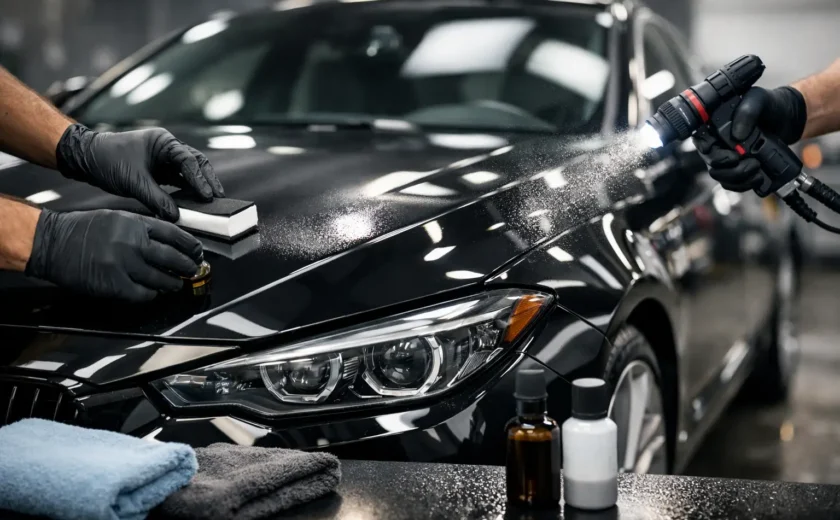
A ceramic sealant is generally a sprayable or wipe-on paint protectant containing silica-based ingredients, often described as SiO2. It bonds more effectively to the painted surface than a conventional wax and leaves behind a slick, hydrophobic layer. It is not the same as a professional ceramic coating, which is a more involved service with greater longevity, but it is a meaningful step up from basic wax protection.
Neither product makes paint invincible. Road grit can still scratch it. Hard-water minerals can still etch the surface if left in the sun. Bird droppings, bug residue, and salt spray still need prompt removal. Good protection makes maintenance easier and gives contaminants less opportunity to bond, but it does not replace careful washing.
Durability in Florida Conditions
Florida vehicles work hard. Sun exposure, humidity, sudden rain, lovebug residue, coastal air, and frequent washing all shorten the life of unprotected finishes. A vehicle parked outside in Port Orange or St. Augustine faces a very different maintenance schedule than a weekend car stored in a garage.
Wax commonly lasts a few weeks to a few months, depending on its formula, prep work, wash habits, and exposure. A high-quality wax on a garage-kept vehicle may hold its gloss well. On a daily driver parked outside, its water behavior can fade quickly after repeated storms, hot panels, and detergent washes.
A ceramic sealant typically provides protection for several months, with some professional-grade formulas lasting longer when maintained correctly. It generally tolerates UV exposure and mild chemical contamination better than wax, which makes it a strong fit for daily-driven vehicles, trucks, SUVs, and vehicles that stay outdoors.
Durability is not just about the calendar. It is about consistency. When water sheets poorly, grime clings more readily, and the paint begins to feel rough after washing, the protective layer is no longer doing its job at the same level. That is the point to refresh it, not simply wait for a season to change.
The Finish: Warm Glow or Crisp Reflection?
Wax remains popular for a reason. On dark colors, classic paint, and well-corrected finishes, a quality wax can create a rich, warm appearance that enthusiasts appreciate. It can make red look deeper, black look wetter, and metallic paint look more dimensional.
Ceramic sealant usually produces a sharper, cleaner-looking gloss. The finish often feels slicker and reflects light with a crisp, glass-like character. On modern clear coat, especially after polishing, that look can be exceptionally clean and polished.
The better choice is partly personal. If your vehicle is a garage-kept weekend car and you enjoy hands-on maintenance, wax can be satisfying and effective. If you want strong gloss with less frequent reapplication, ceramic sealant is usually the more practical choice.
Water Behavior and Easier Maintenance
Both options repel water, but ceramic sealants usually maintain that behavior longer. Water beads and sheets away more efficiently, taking loose dirt with it. This does not mean the vehicle stays clean in every storm, but it can reduce how strongly road film and grime adhere to the paint.
That matters during routine maintenance. A properly protected vehicle is easier to wash, easier to dry, and less likely to need aggressive scrubbing. Less scrubbing means less opportunity to install wash marring into the clear coat.
Wax also improves washability, especially when freshly applied. Its limitation is that the slickness and hydrophobic behavior tend to taper off sooner. For owners who wash every week or two and enjoy reapplying a finishing product, that may be completely acceptable. For busy professionals managing a daily driver, the longer-lasting behavior of a ceramic sealant is often worth it.
Preparation Determines the Result
The protection product gets attention, but the paint underneath determines the finished appearance. Applying ceramic sealant or wax over embedded contamination, oxidation, water spotting, or swirl marks can protect the surface, but it will not hide those defects for long.
Professional preparation may include thorough washing, chemical decontamination, clay treatment, and paint correction or enhancement polishing. This removes bonded contamination and improves clarity before protection is applied. The result is better gloss, more even bonding, and a finish that looks intentionally restored rather than temporarily dressed up.
This is especially relevant for white, silver, and light-colored vehicles. Swirl marks may be harder to see at first glance, but contaminated paint still feels rough and loses brightness. A clean, corrected surface lets metallic flake pop and restores the sharp reflection that makes a well-kept vehicle stand out.
Where a Ceramic Coating Fits
Ceramic sealant is sometimes confused with ceramic coating because both may contain silica technology and both repel water. Their service life and installation process are very different.
A professional ceramic coating is a more durable, semi-permanent protective system. It requires disciplined paint preparation, controlled application, and proper curing. It is the better fit for owners who want long-term protection, reduced maintenance effort, and a higher level of preservation for a newer, corrected, or high-value vehicle.
Ceramic sealant sits between wax and coating. It is an excellent maintenance option for vehicles that need more than a temporary shine but do not require a full coating investment. It can also help maintain a ceramic-coated vehicle when used with compatible wash methods and topper products.
Wax still has its place. It is often a smart choice for show vehicles, seasonal applications, clients who prefer a traditional finish, or owners who want a lower-cost way to refresh gloss after a detail. The mistake is not choosing wax. The mistake is expecting it to perform like a long-term coating or sealant under intense outdoor exposure.
Choosing the Right Protection for Your Vehicle
Choose wax when you value a warm finish, keep the vehicle largely sheltered, and do not mind reapplying protection more often. It works well for hobby cars, classic vehicles, and owners who enjoy a regular detailing routine.
Choose ceramic sealant when the vehicle is driven often, parked outside, or exposed to Florida rain and sun. It offers a better balance of appearance, durability, and manageable upkeep for most daily drivers. It is particularly useful for families, commuters, and business owners who want their vehicle to look consistently cared for without spending every weekend maintaining it.
Choose a professional ceramic coating when preservation is the priority and you want the strongest long-term option. Before coating, consider whether paint correction is needed. Protecting a polished, defect-free surface creates a far more impressive result than coating over neglected paint.
At Diamond Detailing, the right recommendation starts with the vehicle in front of us: its paint condition, storage habits, mileage, and the standard you want to maintain. A protection package should match the vehicle’s real life, not just its first-day shine.
The best finish is the one you can preserve. Whether that means a fresh wax before a special event, a ceramic sealant for dependable daily protection, or a coating for long-term ownership, consistent care will keep the paint looking like an asset worth protecting.