Uncategorized
That chalky outline on your hood is not always a simple cleanliness issue. In Florida, sprinkler overspray, hard water, summer rain, and intense sun can leave mineral deposits on paint faster than many owners expect. Proper water spot removal car care is about more than restoring a clean finish. It is about determining whether those marks are sitting on the surface or have already etched into the clear coat.
A quick wash can remove fresh spots. Aggressive scrubbing, harsh household chemicals, or repeated DIY fixes can make older damage more noticeable. The right approach depends on the severity of the spotting, the condition of the paint, and the level of protection already on the vehicle.
Why water spots become a paint problem
Water itself does not stain paint. The problem begins when water dries and leaves behind minerals, salts, and other contaminants. Municipal water and well water often contain calcium and magnesium. When a vehicle sits near sprinklers, those minerals remain after the water evaporates. Rainwater can also carry dust, pollen, industrial fallout, and airborne contaminants that dry onto exterior surfaces.
Florida heat accelerates the process. A dark vehicle parked in direct sun can become hot enough to bake deposits onto the clear coat in a short time. At first, the result may look like white or gray rings that disappear when the panel is wet. Left untreated, the mineral residue can bond to the surface and create etched outlines that remain visible even after washing.
Glass, glossy trim, chrome, and wheels are also vulnerable. On exterior glass, mineral spotting can reduce clarity and create distracting haze in low-angle sunlight. On painted surfaces, it can compromise the crisp, reflective finish owners expect after a detail.
Water spot removal for car paint starts with diagnosis
Before choosing a product or polish, inspect the spots on a clean, dry vehicle. Fresh mineral deposits usually feel rough or gritty to the touch and may lift with a pH-balanced wash and proper drying. More stubborn spots may remain visible but feel smooth, which often suggests the minerals have etched into the clear coat rather than simply sitting on top of it.
A useful test is to wash and dry a small area, then examine it in direct sunlight or under a focused inspection light. If the rings are still visible after the surface is clean, stronger correction may be needed. Do not assume every mark is a water spot, either. Tree sap, bird droppings, oxidation, and old wax residue can create similar-looking blemishes.
The safest correction always starts with the least aggressive method. This preserves clear coat thickness and avoids creating unnecessary haze, marring, or uneven gloss.
A safe approach for light water spots
For recent spotting, a careful hand wash is the right first move. Work on a cool panel, ideally in the shade, using a quality automotive shampoo and clean microfiber wash media. Rinse thoroughly, especially around mirrors, trim, emblems, and body seams where minerals collect.
Drying matters as much as washing. Use clean, high-quality microfiber drying towels or filtered air to remove water from panel gaps. Letting the vehicle air-dry after a wash can simply replace one set of spots with another, particularly if the water supply has a high mineral content.
Use spot removers carefully
Dedicated water spot removers are formulated to break down mineral deposits, but they are not one-size-fits-all products. Some are acidic, and stronger formulas can affect sensitive trim, polished metal, uncoated wheels, or neglected paint if they are allowed to dwell too long. They should never be sprayed broadly without testing a small, inconspicuous area first.
Apply the product to a cool surface, follow the manufacturer directions, gently wipe with a clean microfiber towel, and rinse or neutralize as directed. Avoid using vinegar, dish soap, bathroom cleaner, or abrasive household pads. Those shortcuts may remove a visible mark while stripping protection, dulling trim, or scratching clear coat.
If a mild remover does not change the appearance of the spot, stop escalating through random chemicals. At that point, the issue may be etching rather than surface contamination.
When polishing is the better solution
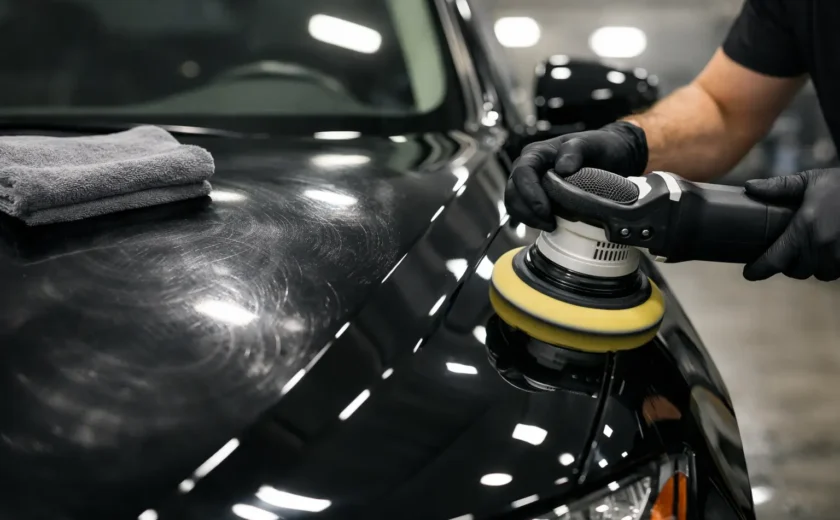
Etched water spots require paint correction, not just cleaning. A professional detailer can measure the paint condition, select the appropriate pad and polish combination, and refine the affected panel without taking more clear coat than necessary. The goal is not simply to make the spots less visible. It is to level the surrounding clear coat carefully enough to restore clarity and gloss.
This is especially important on black paint, dark blue paint, and other finishes that reveal every defect in direct sun. It is also important on newer vehicles with relatively thin factory clear coat, repainted panels with unknown history, and older vehicles that may have been polished repeatedly.
A one-step polish may be enough for mild etching and general dullness. Deeper marks can require a more involved correction process, followed by a refining polish to restore a sharp finish. There is a trade-off: every abrasive correction removes a small amount of clear coat. That is why precision matters. Paint should be corrected when it needs correction, not polished aggressively as routine maintenance.
For severe spotting on glass, professional glass polishing or replacement may be the realistic answer. Deep etching can remain visible because the damage is in the glass itself, not a removable surface film.
Protect the finish after water spot removal car service
Removing spots without adding protection leaves the vehicle exposed to the same conditions that caused them. After cleaning or correction, apply a quality sealant, wax, or ceramic coating suited to the vehicle’s needs and maintenance plan.
Wax offers warmth and gloss but generally requires more frequent reapplication. A paint sealant provides durable protection and easier cleaning for many daily drivers. Ceramic coatings offer stronger chemical resistance, elevated gloss, and improved ease of maintenance when properly installed and maintained. They can help water release from the paint more easily, but they do not make a vehicle immune to water spots.
That distinction matters. A ceramic-coated vehicle can still develop mineral deposits if sprinkler water or rainwater dries on a hot panel. The benefit is that contaminants are often easier to remove before they become permanent, provided the coating is cared for with safe wash methods.
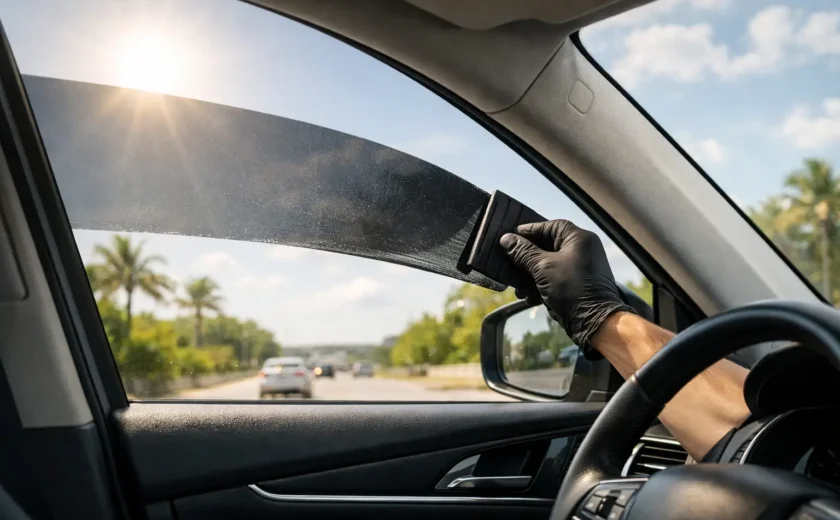
For owners who park outside, paint protection film can provide an additional layer of defense on high-impact areas, while window tint helps reduce interior heat and UV exposure. Each service addresses a different form of wear, and the best plan depends on how and where the vehicle is used.
Prevent spots before they etch
The most effective prevention is simple: do not let contaminated water dry on the vehicle. If a sprinkler hits the car, rinse it off as soon as practical. If rain dries during a hot afternoon, a proper wash may be needed sooner than your normal schedule.
Parking away from irrigation zones is one of the highest-value changes a homeowner can make. If that is not possible, use a covered parking space when available and avoid leaving the vehicle beneath sprinklers overnight. After a professional wash, do a quick walk-around before driving away to catch water trapped behind mirrors, door handles, fuel doors, and badges.
A consistent maintenance detail is also easier on the paint than waiting until deposits become etched. Regular cleaning removes minerals, road film, bug residue, and environmental fallout before they build up. For busy owners, that routine keeps a protected finish looking polished without repeatedly requiring intensive correction.
Know when to hand it to a professional
If the spotting covers multiple panels, has been present for weeks, appears on glass and trim, or remains after a careful wash, professional assessment is the smart choice. The same applies when you are dealing with a luxury finish, matte paint, fresh repaint, ceramic coating, or paint protection film. These surfaces have specific care requirements, and the wrong product can create a more expensive problem.
At Diamond Detailing, the focus is on matching the process to the condition of the vehicle – from safe decontamination and enhancement to precision paint correction and durable protection. The best result is not the most aggressive one. It is the clean, even, high-gloss finish achieved while preserving the paint for the miles ahead.
A water spot caught early is usually a simple maintenance issue. A water spot ignored through a Florida summer can become a correction job. A few careful habits now protect the finish, preserve resale appeal, and keep your vehicle looking like it receives the level of care it deserves.