Uncategorized
Florida paint does not get an easy life. Intense UV exposure, afternoon rain, salt air near the coast, bug residue, hard-water spots, and road grime can steadily dull a vehicle that looked flawless at delivery. A professional ceramic coating service is designed to make that finish easier to maintain while adding durable, high-gloss protection to properly prepared paint.
The key phrase is properly prepared. Ceramic coating is not a shortcut around fading, swirls, oxidation, or existing contamination. Its value comes from the condition of the surface beneath it and the precision used to install it. For owners who want their car, truck, SUV, boat, or RV to hold a polished appearance between details, that distinction matters.
What a Ceramic Coating Service Does
A ceramic coating is a liquid-applied protectant that chemically bonds with the clear coat. Once cured, it creates a slick, durable layer that changes how contaminants interact with the surface. Water beads and sheets more readily, dirt has less grip, and routine washing becomes more efficient.
That does not mean a coated vehicle stays clean forever. Florida rain still leaves mineral deposits. Pollen, salt mist, bird droppings, tree sap, and bugs can still land on the paint. The difference is that these contaminants are generally easier to remove before they have a chance to compromise the finish.
A quality coating also improves visual depth. On dark paint, that can mean richer reflections and sharper clarity. On white, silver, and lighter colors, it often creates a cleaner, more glass-like shine. The coating enhances the paint that is already there, which is why paint correction and surface preparation are often the most important parts of the service.
Ceramic Coating Is Protection, Not Paint Armor
One of the most common misunderstandings is that ceramic coating prevents every type of damage. It does not. A coating will not stop rock chips, deep scratches, door dings, or damage from a collision. It also cannot repair clear coat failure or cover up severe defects.
For impact-prone areas such as bumpers, hoods, mirrors, rocker panels, and door edges, paint protection film is the stronger option because it provides a physical barrier. Ceramic coating and paint protection film are often used together: film handles high-impact zones, while coating supports easier maintenance, gloss, and chemical resistance across the vehicle.
Ceramic protection also is not a replacement for washing. Letting grime build up for months, washing with abrasive brushes, or allowing sprinkler water to dry on hot paint can still create problems. A coating reduces maintenance effort, but it works best with a consistent maintenance plan.
Why Preparation Determines the Result
Applying a coating to unprepared paint can seal in what you were hoping to improve: embedded contamination, wash-induced swirls, haze, oxidation, or uneven gloss. That may still produce water beading, but it will not deliver the refined finish most owners expect from a premium service.
The process begins with a detailed evaluation of the vehicle’s paint condition. A thorough wash removes loose dirt, followed by chemical decontamination and clay treatment as needed to address bonded contamination. From there, paint is inspected under proper lighting to identify defects that ordinary daylight can hide.
Paint Correction Before Protection
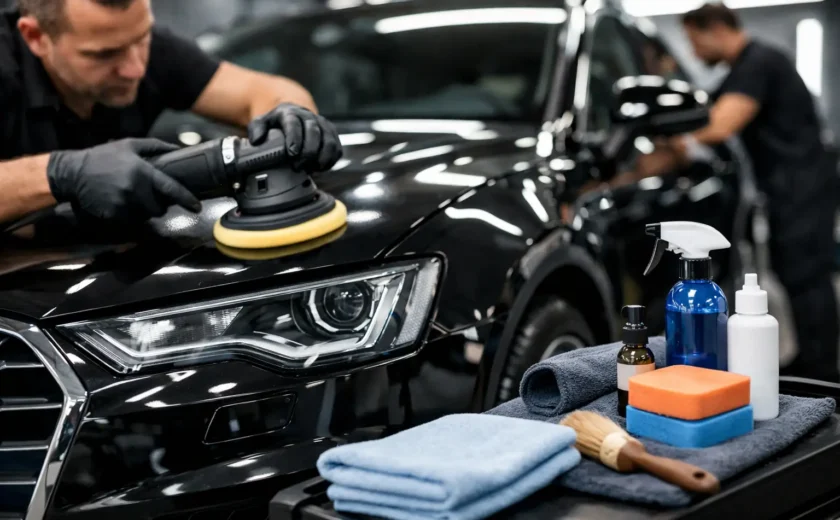
Paint correction uses machine polishing and carefully selected compounds or polishes to reduce swirl marks, light scratches, oxidation, and dullness in the clear coat. The level of correction depends on the vehicle’s condition, paint type, age, and the owner’s goals.
A newer vehicle may need only a light enhancement polish to improve clarity before coating. A daily driver that has seen automatic car washes may benefit from a more involved correction process. A show-focused vehicle may call for a higher level of refinement. More correction can create a more dramatic transformation, but it also requires additional time and should be matched to the remaining clear coat and realistic ownership expectations.
After polishing, the paint is carefully wiped down to remove residual oils so the coating can bond correctly. The coating is then applied panel by panel, leveled with precision, and allowed to cure in controlled conditions. Rushing this stage can leave high spots or uneven appearance, which is why professional installation is about far more than applying a bottle to paint.
Is Ceramic Coating Worth It for Your Vehicle?
For many Florida owners, the answer depends less on whether the vehicle is exotic or brand-new and more on how they use and maintain it. A ceramic coating can make sense for a daily-driven SUV, a work truck, a weekend sports car, a luxury sedan, or a well-kept RV. The goal is not simply to add shine for a photo. It is to preserve a clean, polished finish with less friction in the maintenance process.
It is especially valuable when a vehicle spends time outdoors. UV exposure can accelerate fading and degradation over time, while frequent rain and humidity create ideal conditions for water spotting and buildup. Coated surfaces are not immune to those elements, but they give you a more manageable surface to clean and protect.
The service may be less practical for an owner who rarely washes the vehicle, plans to use harsh tunnel washes, or expects the coating to eliminate the need for care. In that situation, a professional detail and a recurring maintenance plan may be the better starting point. The best service is the one that fits how you actually use your vehicle.
Choosing the Right Level of Ceramic Protection
Not every coating package should be identical. The right choice reflects the vehicle’s condition, where it is stored, how often it is driven, and the level of finish you want to maintain. A newer garage-kept vehicle may need a different approach than a sun-exposed commuter with years of wash marks.
A clear consultation should cover the current paint condition, whether correction is recommended, which exterior surfaces are included, expected care requirements, and the realistic protection limits of the selected coating. Wheels, glass, trim, and interior surfaces may also be treated with products designed specifically for those materials.
At Diamond Detailing, the focus is on matching the service to the vehicle instead of forcing every owner into the same package. A detailed inspection makes it possible to recommend the level of correction and protection that delivers a visible result without overselling what the vehicle does not need.
How to Care for a Coated Vehicle
The first few days after installation are important because the coating needs time to fully cure. Your technician should provide specific aftercare instructions based on the product and conditions. Once cured, maintenance is straightforward, but technique still matters.
Use a pH-balanced automotive shampoo, clean wash media, and a safe drying method. Avoid abrasive brushes and aggressive automatic washes that can create swirls in the coating or leave residue behind. Bird droppings, bugs, sap, and hard-water spots should be addressed promptly, particularly during hot weather.
A regular professional maintenance detail is also useful. It allows the surface to be safely cleaned, inspected, and refreshed while preventing contamination from building up in areas that are easy to miss at home. This is particularly helpful for vehicles that live outside, travel frequently, or spend time near the coast.
Ceramic coating is not about making a vehicle untouchable. It is about giving a properly refined finish a stronger defense against the conditions it faces every day, then maintaining that finish with the same level of care that went into creating it. If your paint has lost its clarity or you want to protect a vehicle while it still looks its best, start with a professional inspection and let the condition of the surface guide the plan.