Uncategorized
Cloudy headlights can make an otherwise well-maintained vehicle look tired long before the paint or interior shows its age. More importantly, oxidation on the lens can reduce how much usable light reaches the road. A professional headlight restoration service corrects that haze with a controlled process, then adds protection designed to keep the lenses clearer in Florida’s demanding sun.
For drivers in Port Orange, St. Augustine, and across the Florida coast, headlights take a steady beating from UV exposure, heat, rain, salt air, road film, and bug residue. The cloudy, yellowed appearance is not simply surface dirt. It is usually damage in the outer protective layer of the polycarbonate lens. Cleaning alone may make it look better for a day, but it cannot reverse oxidation.
What Causes Headlights to Turn Yellow or Hazy?
Most modern vehicles use polycarbonate headlight lenses. This material is strong and impact-resistant, but it depends on a clear UV-resistant coating to maintain its appearance. Over time, that coating breaks down. The lens can begin to look yellow, chalky, cloudy, or unevenly faded.
Florida accelerates the process. Long stretches of direct sun and high temperatures weaken the lens coating, while road contaminants and frequent rain add abrasion and staining. Vehicles parked outdoors, especially those facing the afternoon sun, often show noticeable haze sooner than garage-kept vehicles.
There are several forms of headlight damage, and each affects the restoration approach. Light oxidation may appear as a soft haze on the outer surface. More advanced lenses can have yellowing, rough texture, visible peeling, or deep pitting from highway driving. In some cases, moisture or cracking is inside the assembly. External polishing will not repair internal condensation or a damaged housing, so an honest inspection matters before any service begins.
What a Professional Headlight Restoration Service Includes
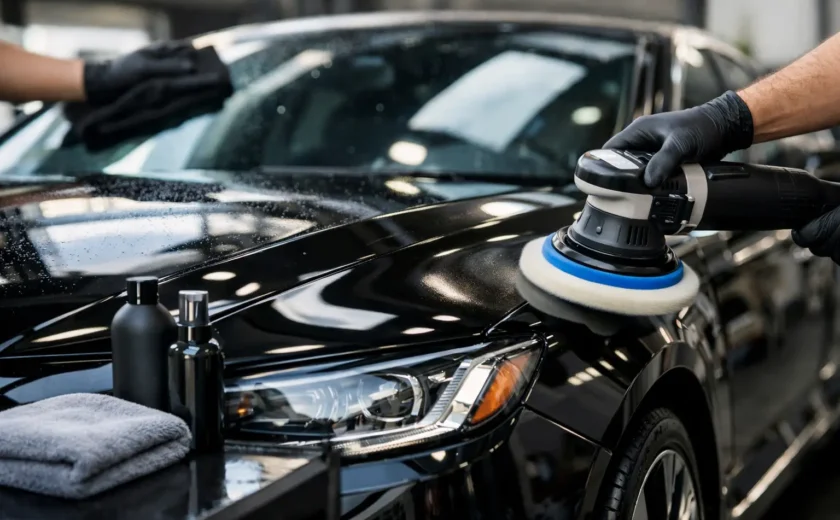
A proper restoration is more involved than wiping on a chemical cleaner or using a quick drill attachment. The goal is to level damaged material safely, refine the lens to restore clarity, and apply a durable protective layer afterward.
The process begins with cleaning and carefully masking the paint, trim, and surrounding panels. This is especially important on dark paint, delicate trim, and vehicles with paint protection film or ceramic coating nearby. The lens is then evaluated to determine the least aggressive method needed to achieve a uniform result.
For moderate or heavy oxidation, technicians typically wet sand through controlled stages to remove failed coating and surface defects. The lens is refined with polishing steps that restore optical clarity and eliminate sanding haze. Skipping refinement can leave a lens looking clearer from a distance but hazy when illuminated at night.
The final protection step separates a lasting restoration from a short-lived cosmetic improvement. Once oxidation has been removed, bare polycarbonate is vulnerable. A quality UV-resistant coating or dedicated lens sealant helps slow future yellowing and preserves the restored finish. The right product depends on lens condition, vehicle use, outdoor storage, and the level of longevity the owner expects.
At Diamond Detailing, the focus is not on making headlights look acceptable for a few weeks. The work is approached as restoration and protection, with attention to clean edges, even correction, and a finish that complements the condition of the entire vehicle.
When Restoration Is the Right Choice
Headlight restoration is a strong value when the lens is cloudy, yellowed, dull, or visibly oxidized on the outside but remains structurally sound. It can dramatically improve the vehicle’s front-end appearance while supporting better nighttime visibility. For a daily driver, that means a cleaner presentation without the cost of replacing complete assemblies. For an enthusiast vehicle or a vehicle being prepared for sale, clear lenses can make the front end look years newer.
Restoration is also worth considering before a major exterior detail, paint correction, ceramic coating, or resale appointment. Freshly corrected paint can make neglected headlights stand out even more. Addressing both creates a more complete, intentional finish.
The trade-off is that restoration is not a replacement for every damaged assembly. Lenses with severe internal haze, large cracks, broken mounting points, water intrusion, or extensive damage beneath the outer surface may need replacement. A professional should explain that distinction clearly rather than promising a perfect result where the material will not support one.
The Safety and Appearance Benefits Go Together
Headlight clarity is often discussed as a cosmetic issue, but the practical benefit matters just as much. Oxidation can scatter and block the light produced by the bulb. Drivers may notice reduced reach on dark roads, weaker definition at the edge of the beam, or a dim appearance even after installing new bulbs.
Restoration does not change the output rating of the bulbs or correct a faulty electrical system. It improves the lens’s ability to transmit the light already being produced. On a vehicle with properly functioning headlights, clearer lenses can provide a more defined, useful beam pattern.
Appearance is still a valid reason to invest in the service. Headlights sit at the front of the vehicle, where sun damage is immediately noticeable. A clean, clear lens sharpens the look of the grille, paint, wheels, and trim around it. It is one of those details that can change the perceived age and level of care of the entire vehicle.
Why DIY Kits Often Fade Quickly
A retail restoration kit can be useful for a lightly oxidized lens when the owner is willing to spend time preparing the area and following every step. The problem is not that all DIY products fail. The problem is that many quick methods remove oxidation without replacing meaningful UV protection.
Polishing compounds, household abrasives, and some inexpensive kits can create a temporary clear appearance by stripping away the damaged layer. If the lens is left unprotected or coated unevenly, oxidation can return quickly under Florida sun. Aggressive sanding can also leave scratches, thin the material unnecessarily, or damage adjacent paint and trim.
Professional work is valuable when consistency, finish quality, and protection matter. It also saves vehicle owners from experimenting on a highly visible part of the car. The best choice depends on the condition of the lenses and the standard you expect from the finished vehicle.
How to Keep Restored Headlights Clearer for Longer
No exterior surface is immune to UV exposure, but regular care can extend the life of restored headlights. Wash the lenses with pH-balanced vehicle soap rather than harsh cleaners, and avoid dry-wiping grit across the surface. If bug residue or road film is allowed to sit for long periods, remove it with appropriate automotive-safe products.
Parking in a garage or shaded area when practical helps, though it is not realistic for every vehicle. A maintenance detail can also keep contamination from building up around the front end. If the vehicle receives ceramic protection, paint protection film, or other exterior preservation services, ask how the headlights should be maintained alongside those surfaces.
Most importantly, do not wait until the lens is fully yellow, rough, and difficult to see through. Early oxidation is usually easier to correct and may require less aggressive sanding. A quick inspection during routine detailing can identify the change before it becomes a larger restoration project.
Clear headlights are a small detail with an outsized effect. When the lenses are corrected properly and protected afterward, your vehicle looks more cared for, drives with better nighttime confidence, and holds onto the polished appearance you expect from it.