Uncategorized
A vehicle can look tired long before its paint is actually beyond saving. Under Florida sun, salt air, road film, sprinkler spots, and automatic-wash scratches, a once-deep finish can become hazy, swirled, and dull. The choice between paint correction versus repainting a car comes down to one question: is the problem sitting in the clear coat, or has the paint itself failed?
That distinction matters. Paint correction can produce a dramatic transformation while preserving the factory finish. Repainting can be the right repair for genuine damage, but it is more invasive, more expensive, and dependent on the quality of bodywork and color matching. A proper inspection should come before either decision.
What Paint Correction Can Restore
Most modern vehicles have a colored base coat protected by a clear coat. Paint correction is the controlled process of leveling defects within that clear coat through professional polishing. It does not add paint, hide flaws with a glaze, or repair missing material. Instead, it refines the surface so light reflects more evenly.
When the clear coat is contaminated, oxidized, or covered in fine scratches, light scatters rather than reflecting cleanly. That is why black vehicles can look gray in direct sun and metallic finishes can lose their crispness. Correction removes a measured amount of damaged clear coat to restore clarity, depth, and gloss.
Defects that are strong candidates for correction
Paint correction is often the better option for swirl marks, wash marring, light scratches, water spots, oxidation, bird-dropping etching, and haze from neglected paint. It can also improve the appearance of light scuffs and transferred paint, provided the defect has not cut through the clear coat.
A professional detailer assesses more than what is visible in the shade. Paint thickness readings, panel history, paint hardness, previous polishing work, and the depth of each defect all affect what can be safely corrected. The goal is not to chase every mark at any cost. The goal is to achieve the best visible improvement while preserving enough clear coat for the vehicle’s future.
That approach is especially valuable on newer vehicles, collector vehicles, luxury finishes, and any car with original factory paint in good structural condition. Factory paint is generally durable and consistently applied. Keeping it intact can support both appearance and resale confidence.
When Repainting Is the Better Repair
Repainting is necessary when paint correction has no material left to work with. If the damage extends through the clear coat and into the color coat, polishing may make the area look cleaner, but it cannot replace missing paint.
Deep scratches that catch a fingernail are not always repaint candidates, but they deserve a close inspection. If you can see a different color beneath the surface, exposed primer, bare metal, or rust beginning around the damage, a body shop repair is usually the correct path. The same applies to peeling clear coat, widespread paint failure, severe rock chips, collision damage, dents with cracked paint, and corrosion.
Repainting can restore protection as well as appearance when done correctly. However, it is not a shortcut for ordinary swirls or dullness. A repaint involves preparation, masking, repair work, color matching, blending into adjacent panels when needed, spraying, curing, and often finish sanding and polishing. Even an excellent repaint may not age exactly like the original finish, particularly on panels exposed to intense sun.
For a single damaged bumper or fender, spot repair or panel repainting may make perfect sense. For broad cosmetic concerns across an otherwise healthy vehicle, repainting the entire car is usually excessive compared with correction and protection.
Paint Correction Versus Repainting a Car: The Real Trade-Offs
The most visible difference is what each service addresses. Correction improves existing paint. Repainting replaces failed or damaged paint. But the decision also affects cost, downtime, long-term maintenance, and vehicle history.
Paint correction is generally less invasive and often requires less downtime than a repaint. It can substantially improve a vehicle’s presentation without changing original panels or introducing color-match variables. The final result depends on the condition of the paint, but a properly corrected finish can look remarkably close to new when defects are primarily in the clear coat.
Repainting costs more because it involves materials, skilled labor, and repair preparation. It may also require a longer wait for curing before protection products can be applied. Fresh paint should be treated according to the body shop’s curing guidance, rather than immediately sealed under a ceramic coating or paint protection film.
Neither option is automatically “better.” A 10-year-old SUV with oxidation and wash scratches may be an ideal correction candidate. A newer sedan with a key scratch through the paint on the door may need a localized repaint before any polishing is considered. In many cases, the best plan includes both: repair the failed area, then correct and protect the rest of the vehicle for a uniform finish.
How to Tell Which Service Your Vehicle Needs
Start by looking at the defect in direct sunlight or under focused inspection lighting. Swirls and fine scratches often appear as circular or spiderweb-like marks across a large section of paint. They tend to become more obvious when the sun hits the panel at an angle. These are commonly correctable.
Next, inspect the color inside the scratch. If it looks white on a dark vehicle, that may be clear-coat damage or transferred material, not necessarily exposed primer. If you see gray primer, metal, rust, or a sharply defined break in the color layer, the panel likely needs paint repair.
Peeling is another clear signal. Once clear coat begins separating from the color coat, polishing cannot bond it back down. The affected panel needs refinishing. Similarly, heavy oxidation can sometimes be corrected, but if the clear coat is thin, chalky, or failing, a responsible professional may recommend repainting rather than risking further deterioration.
A quality evaluation should also consider the vehicle’s purpose. A daily driver may benefit from a one-step polish that restores gloss and removes a meaningful portion of light defects. An enthusiast-owned vehicle may justify a more intensive multi-step correction for greater refinement. A vehicle preparing for sale may need targeted correction that improves presentation while respecting the owner’s budget.
Protection Should Follow the Repair
Whether a vehicle is corrected or repainted, the finish needs protection afterward. Florida conditions are unforgiving: UV exposure, insects, rain, hard-water spots, coastal contamination, and frequent washing all work against paint over time.
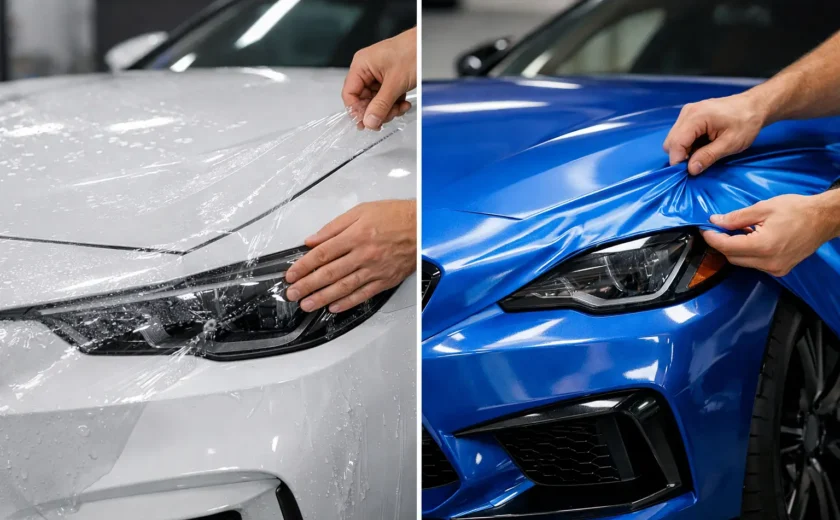
After paint correction, a ceramic coating can help keep the finish easier to wash, more resistant to chemical contamination, and consistently glossy. It is not armor against rock chips or deep scratches, but it supports the investment in correction by making ongoing maintenance easier. Paint protection film is a stronger choice for high-impact areas such as front bumpers, hoods, mirrors, and rocker panels, where road debris is the primary concern.
Freshly repainted panels require a more careful timeline. The paint must cure fully before coatings or film are installed. Once approved for protection, matching the protection level across repaired and original panels helps the vehicle age more evenly.
The Best Result Starts With an Honest Inspection
The right recommendation should not be based on a package alone. It should be based on paint condition, the depth of the damage, the amount of clear coat available, and the standard you expect from the finished vehicle. At Diamond Detailing, that means treating correction as a precision service, not a quick shine, and recognizing when a paint repair should come first.
If your paint is dull, scratched, or weathered, do not assume a repaint is the only answer. Preserve original paint when it can be safely restored, repaint only where the finish has genuinely failed, and protect the result so your vehicle keeps looking cared for long after it leaves the shop.