Uncategorized
A vehicle can look freshly detailed after either wax or ceramic coating, but the ownership experience afterward is very different. That is the real difference between wax and ceramic coating. One gives you a short-term boost in gloss and water behavior. The other is built for longer-lasting protection, easier maintenance, and a more durable finish in Florida conditions.
If you are trying to decide where your money is better spent, the answer depends on how you use your vehicle, how often you want to maintain it, and what level of finish you expect to keep over time. Both products have a place. They just solve different problems.
What is the difference between wax and ceramic coating?
Wax is a sacrificial layer that sits on top of your paint. Its job is to enhance gloss, add some slickness, and provide a modest barrier against water, light contamination, and minor environmental exposure. Traditional car waxes are usually made from natural waxes, synthetic ingredients, or a blend of both. They can make paint look richer and smoother, but they wear down fairly quickly.
Ceramic coating is a liquid-applied protective product designed to bond much more firmly to the surface. Once cured, it creates a more durable protective layer than wax. It is not a force field, and it does not make paint immune to scratches or rock chips, but it does provide stronger resistance to UV exposure, chemical contaminants, bird droppings, road film, and regular washing wear.
The simplest way to look at it is this: wax is short-term protection with cosmetic benefits, while ceramic coating is longer-term protection with cosmetic and maintenance benefits.
How wax performs on a daily driver
Wax still has value, especially for owners who enjoy regular upkeep or want a lower initial cost. A properly applied wax can deepen gloss, make water bead nicely, and leave the paint feeling smooth. For a vehicle that is garage-kept, washed often, and not exposed to intense conditions every day, wax can be a reasonable choice.
The limitation is durability. In Florida, sun, heat, humidity, rain, and airborne contamination can break wax down fast. That means the finish you liked in week one may be noticeably weaker in a matter of weeks or a couple of months, depending on the product and the conditions.
Wax also requires more owner involvement. If you want the vehicle to keep looking protected, you need to reapply it on a regular schedule. For some enthusiasts, that is part of the appeal. For busy professionals or families, it usually becomes one more maintenance task that gets pushed off.
How ceramic coating changes maintenance
Ceramic coating is popular because it reduces the amount of effort needed to keep a vehicle looking sharp. Dirt, water, and grime do not bond to the surface as easily as they do on unprotected paint or on worn-out wax. That usually means easier wash sessions, better water behavior, and a cleaner appearance between details.
It also helps preserve the results of paint correction. If the paint has been polished to remove swirls, oxidation, and dullness, a coating helps lock in that refined finish for longer. On a premium vehicle or any vehicle you take pride in, that matters.
What ceramic coating does not do is eliminate maintenance. The vehicle still needs proper washing. It still needs decontamination at times. If you run it through harsh automatic washes, you can still degrade the finish and create marring. Ceramic coating makes maintenance easier, not optional.
Difference between wax and ceramic coating in durability
Durability is where the gap becomes obvious. Wax is measured in weeks or a few months under real-world use. Ceramic coating is measured in years when properly installed and maintained.
That difference affects more than your calendar. It affects consistency. A waxed vehicle may look excellent right after application, then gradually lose hydrophobic performance and protection. A coated vehicle tends to maintain a more stable level of performance over a much longer period.
For owners who want their vehicle to look polished year-round instead of just after occasional detailing, ceramic coating usually makes more sense.
Gloss, slickness, and appearance
A lot of people assume wax always looks warmer and ceramic always looks glassier. There is some truth to that, but it is not the full story. Final appearance depends heavily on paint condition, prep work, lighting, and color.
Wax can give paint a rich, freshly dressed look. On darker colors especially, some owners like that softer glow. Ceramic coating tends to deliver sharper reflections and a cleaner, high-clarity finish. On well-corrected paint, it can make body lines, metallic flake, and depth stand out in a very crisp way.
The bigger issue is not which one looks better on day one. It is which one keeps looking better after exposure, washing, and time. That is where coating usually pulls ahead.
Protection against Florida conditions
In this market, protection has to be judged against real conditions, not ideal ones. UV intensity, salt air near the coast, summer storms, bug splatter, bird droppings, and heat all put pressure on a vehicle’s finish.
Wax offers a lighter layer of defense, but it degrades faster under this kind of exposure. Ceramic coating holds up better and gives you more time to safely remove contaminants before they cause staining or etching. That does not mean you should let bug residue or bird droppings sit. It means the surface has a better line of defense while you stay on top of maintenance.
For customers who park outside regularly or drive often, longer-term protection is not just a luxury upgrade. It is a practical decision.
Cost: lower upfront vs better long-term value
Wax wins on initial price. It is less expensive to apply, whether you do it yourself or have it included in a detail package. If your priority is a quick cosmetic refresh at a modest cost, wax makes sense.
Ceramic coating costs more because the process is more involved. Proper installation often includes paint decontamination, polishing, correction as needed, panel prep, careful application, and curing considerations. You are not just paying for a bottle of product. You are paying for surface preparation, precision application, and longer-lasting performance.
Over time, many owners find ceramic coating gives better value because it lasts longer, reduces frequent reapplication, and helps preserve appearance with less effort. But value still depends on your habits. If you trade vehicles quickly, keep one in a garage, or simply enjoy rewaxing by hand, a coating may be more than you need.
Which option is right for your vehicle?
If you want a temporary boost in gloss, prefer a lower upfront investment, or enjoy regular hands-on detailing, wax can still be a solid choice. It is also a good fit for vehicles that are not driven much or are kept in controlled conditions.
If you want stronger protection, easier maintenance, and a finish that stays sharper for longer, ceramic coating is usually the better fit. It is especially useful for daily drivers, dark-colored vehicles, luxury cars, trucks and SUVs exposed to the elements, and any owner focused on long-term appearance and resale preservation.
There is also a middle ground in the conversation. Not every vehicle needs the same level of correction or the most advanced coating package available. The right solution depends on paint condition, storage, mileage, expectations, and budget. A quality shop should help you match the service to the vehicle instead of pushing the same answer for everyone.
The part people overlook: prep work matters most
Whether you choose wax or ceramic coating, surface preparation has a huge impact on the final result. If the paint is contaminated, swirled, oxidized, or poorly washed, no protection product will hide that for long.
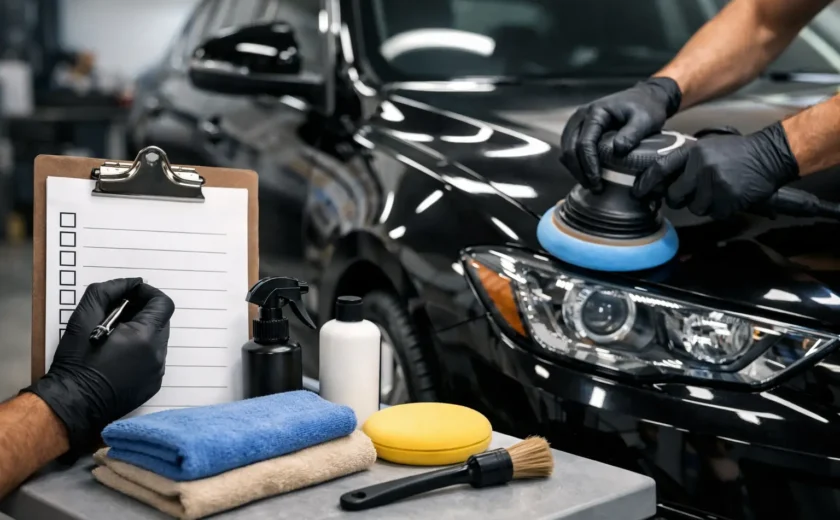
That is why professional prep matters. Washing, decontamination, polishing, and correction create the foundation. Protection is the final step, not the entire job. A ceramic coating applied over neglected paint will not deliver the same result as one installed after proper refinement.
At a premium level, the visible transformation comes from craftsmanship before the protection ever goes on.
For most owners who want their vehicle to hold a cleaner, glossier, more refined finish with less maintenance, ceramic coating is the stronger investment. For others, wax remains a useful option when the goal is simple shine and short-term protection. The best choice is the one that matches how you actually use your vehicle, not just how you want it to look on day one.