Uncategorized
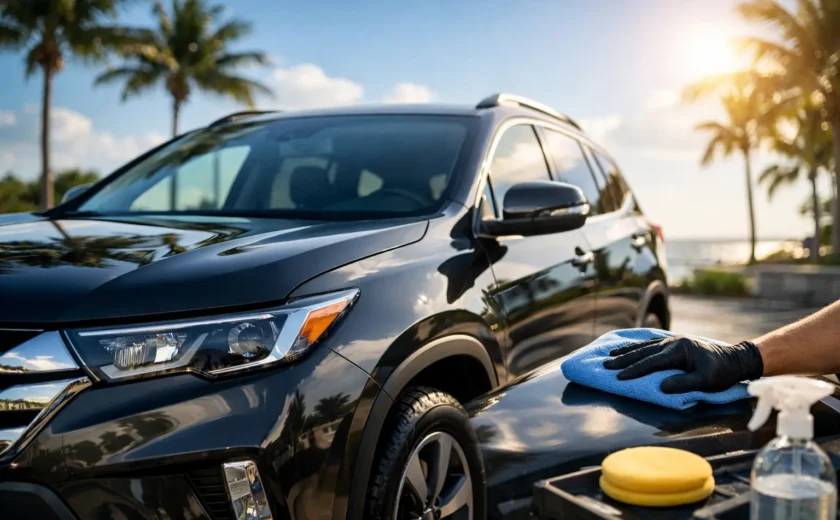
A vehicle can look clean and still appear tired under direct Florida sun. Fine swirls, water-spot etching, oxidation, and hazy reflections become obvious when light hits the paint at the right angle. This guide to automotive paint polishing explains what polishing actually does, when it is worth pursuing, and why the process should be matched to the condition of your vehicle rather than treated as a one-size-fits-all service.
Paint polishing is one of the most visible upgrades available in professional detailing. Done correctly, it restores clarity and gloss while preserving as much of the factory clear coat as possible. Done aggressively or without proper preparation, it can create uneven results, leave behind haze, or unnecessarily reduce the protective clear layer that gives modern automotive paint its depth and durability.
What Automotive Paint Polishing Really Does
Most modern vehicles have a multi-layer paint system: primer, color coat, and a clear coat on top. The clear coat is what reflects light and provides the glossy appearance people associate with a well-maintained vehicle. It is also where most wash marring, light scratches, oxidation, and mineral damage occur.
Polishing does not simply cover defects with oils or fillers. True paint correction carefully levels a microscopic amount of clear coat around a defect so light reflects more evenly. When the surrounding paint becomes more uniform, swirls and scratches are far less visible, and the finish looks sharper, richer, and more reflective.
The key word is carefully. Every polishing service involves a measured balance between improvement and preservation. A lightly swirled newer SUV may need only a refinement polish. A neglected vehicle with severe wash marks, oxidation, or etched water spots may require a multi-stage correction. Deep scratches that catch a fingernail may be reduced, but they cannot always be safely removed without risking the integrity of the clear coat.
Start With a Proper Paint Assessment
A quality result begins before a machine polisher ever touches the vehicle. Paint should be inspected clean, dry, and under focused lighting. Sunlight can reveal broad haze, while inspection lights expose the finer swirls that ordinary lighting hides.
A professional assessment considers paint hardness, panel condition, color, previous bodywork, and the amount of correction the owner expects. Some factory paint is relatively hard and can tolerate more polishing effort. Other finishes are softer and correct quickly, but they can also mar easily. Repainted panels may behave differently from original paint, which is why a careful technician tests a small area before selecting a process for the entire vehicle.
It also helps to distinguish between defects that can be corrected and defects that need a different solution. Polishing is effective for many common issues, including:
- Fine swirl marks from improper washing or automatic car washes
- Light scratches, scuffs, and paint transfer
- Dullness and mild oxidation from sun exposure
- Light water-spot etching and surface contamination
- Haze left by poor polishing or aging protection products
Paint chips, peeling clear coat, deep gouges, and severe etched damage are not polishing problems alone. Those conditions may require touch-up work, wet sanding by a trained professional, or body-shop refinishing. Honest recommendations protect both the vehicle and the owner’s expectations.
Preparation Determines the Finish
Polishing a dirty or contaminated surface is a fast way to create more defects. Before correction begins, the vehicle needs a careful wash to remove loose grime, road film, and residue. Wheels, trim, seams, and lower panels deserve attention because dirt can migrate back onto the paint during the process.
Chemical decontamination follows when needed. Iron removers can address embedded metallic particles from brake dust and road exposure, while tar removers handle stubborn petroleum-based residue. A clay treatment or synthetic clay media may then be used to remove bonded contamination that washing cannot lift. Paint should feel smooth before correction begins.
This preparation is not an optional extra. Contamination interferes with polishing pads, reduces consistency, and can drag across the finish. A clean surface also gives the technician a clearer view of the actual paint defects instead of masking them beneath grime or old wax.
Choosing the Right Level of Correction
A practical guide to automotive paint polishing should make one point clear: the most aggressive correction is not automatically the best correction. The appropriate service depends on the vehicle’s condition, ownership goals, and available clear coat.
Enhancement Polishing
An enhancement polish is designed for vehicles that are generally well cared for but have lost some crispness and gloss. It can noticeably improve reflections and reduce light swirls without pursuing near-total defect removal. This is often an excellent choice for newer vehicles, leased vehicles, or owners who want a significant visual improvement with a conservative approach.
One-Step Correction
A one-step correction combines cutting and finishing ability in a single polishing stage. It can address moderate swirls and improve clarity substantially, although deeper defects will remain. For many daily-driven cars, trucks, and SUVs, this is the right balance of transformation, time, and paint preservation.
Multi-Step Paint Correction
Multi-step correction begins with a more targeted cutting stage to reduce heavier defects, followed by a refining polish that restores clarity and high gloss. It is appropriate for heavily swirled finishes, enthusiast-owned vehicles, and vehicles being prepared for premium protection. This process can produce an exceptional result, but it requires more labor, more inspection, and a thoughtful approach to clear-coat thickness.
No ethical detailer should promise that every scratch will disappear. The better standard is a finish that looks dramatically cleaner, sharper, and more refined while maintaining a responsible margin of safety for the paint.
Pads, Polish, and Technique Matter
Machine polishing is controlled abrasion, not random buffing. The result comes from matching the pad, polish, machine, pressure, speed, and working time to the paint. A microfiber or firmer foam pad may be used for cutting, while a softer foam pad is commonly used for final refinement. Different compounds and polishes are selected based on the severity of defects and the response of the paint during a test spot.
A dual-action polisher is often preferred for correction because its motion is safer and more forgiving than a rotary machine in many situations. That said, the tool alone does not determine the result. Improper pad cleaning, excessive pressure, dirty towels, or working a product too long can create haze and new marring.
Edges, body lines, emblems, and thin or repainted areas need special attention. These areas may receive less correction or be taped off entirely. Precision is not about chasing perfection on every square inch. It is about knowing where the finish can be safely improved and where restraint is the better decision.
Protect the Paint After Polishing
Polishing exposes the best version of the paint. Protection is what helps keep it that way. Once correction is complete, the finish should be wiped down as needed to remove polishing oils, then protected with a product suited to the owner’s priorities.
A quality sealant offers a strong, glossy layer of protection with straightforward upkeep. Ceramic coatings provide longer-term chemical resistance, easier cleaning, and improved resistance to environmental fallout when properly installed and maintained. Paint protection film serves a different purpose: it is designed to help defend high-impact areas from rock chips, road debris, and abrasion. For many premium vehicles, a combination of paint correction, ceramic coating, and strategically placed film offers the most complete preservation plan.
Protection does not make paint maintenance-free. It reduces the burden of maintenance and makes contaminants easier to remove before they cause damage. Regular washing with proper tools remains essential, especially in coastal Florida conditions where salt air, UV exposure, insects, and sudden rain can work against an unprotected finish.
Keep Corrected Paint Looking Corrected
The wash process is where most new swirls begin. Avoid tunnel washes with abrasive brushes, harsh household cleaners, and dry wiping dust from the paint. Use clean wash media, quality microfiber towels, and a lubrication-rich car shampoo. Rinse thoroughly first so loose grit is not dragged across the finish.
Drying technique matters just as much. A dedicated automotive drying towel and a clean blower can reduce contact with the paint. If bird droppings, bug splatter, tree sap, or water spots appear, remove them promptly. The longer contaminants sit under sun and heat, the greater the chance they will etch the surface.
For owners who want the finish maintained at a premium standard without managing every detail themselves, scheduled maintenance detailing is often the smarter investment. Diamond Detailing approaches paint care as a preservation service, not a quick cosmetic fix, with cleaning methods and protection choices selected to support the correction work already performed.
The best time to polish is before the finish reaches the point where damage becomes expensive or impossible to correct. A measured correction followed by consistent, gentle maintenance keeps a vehicle looking like it is cared for every time the sun hits the paint.